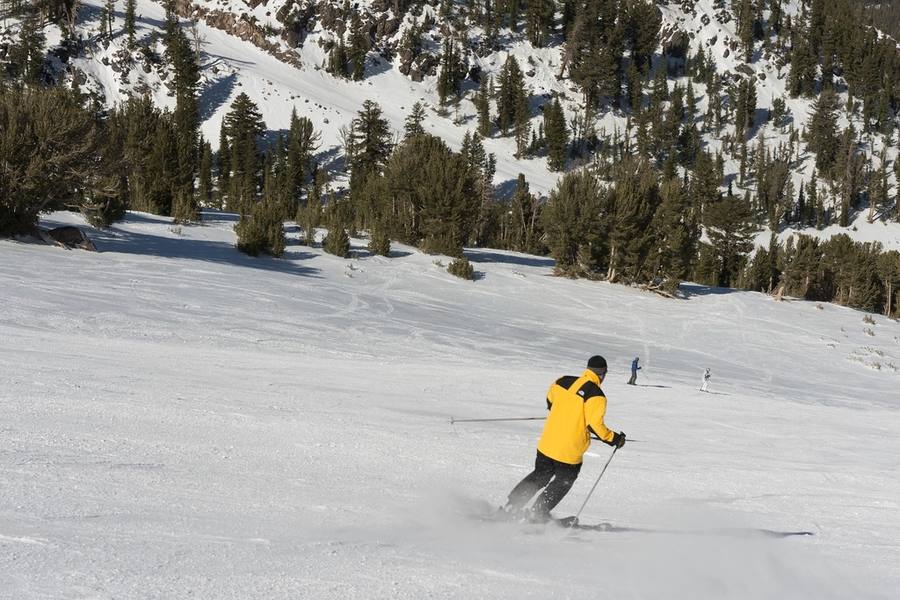
Representative image (stock photo); not the exact product.
They Are Outgrown Every Year
Children grow and their skiing improves simultaneously, which means a pair bought this season is frequently wrong by the next in both length and ability.
That makes buying new skis for a child an expensive annual commitment, and it is why seasonal hire and second-hand markets dominate this category.
Many resorts and shops run season-long hire that includes swapping for a larger size mid-season, which for a growing child is straightforwardly better value.
Length And Why Shorter Helps
Shorter skis turn more easily and are less tiring for a child to control, and the instinct to buy long so they last two seasons directly slows progression.
A ski between chest and chin height suits most children learning, with more confident skiers going slightly longer.
A child struggling on skis that are too long looks like a child who does not enjoy skiing, which is a discouraging misreading of an equipment problem.
Bindings, Weight And DIN Settings
Children are light, which means bindings must be set to very low release values, and not every binding adjusts low enough for a small child.
Binding settings for children must be set by a technician using weight, height, age and boot length, and guessing is genuinely dangerous.
Second-hand bindings may be too old to be indemnified and adjusted by a shop, which is a real limitation on buying used equipment cheaply.
Helmets Are Not Optional
Helmet use is mandatory for children in many alpine regions and is standard practice everywhere, and a properly fitted helmet is the single most valuable item of equipment.
A helmet must fit now rather than be grown into, since a loose helmet moves on impact and protects poorly.
Helmets should be replaced after any significant impact, since the protective liner crushes permanently by design and a helmet that looks fine may be spent.
Comfort Determines Whether They Enjoy It
Cold hands, wet gloves and badly fitting boots end a child's skiing day faster than anything to do with the skis.
Boots that are too big to allow for growth cause a child to lose control and lose confidence, which is a poor trade for one extra season.
Warm dry gloves, a neck gaiter and regular breaks indoors do more for whether a child wants to ski again than any equipment decision.
Ski school is worth the money for reasons beyond technique, since children learn considerably better from an instructor than from a parent and the social element of a group keeps them engaged. It also gives parents several hours of their own skiing, which is not a trivial consideration on a family holiday. Most resorts run graded groups so a child skis with others at a similar level.
Bright colours are worth choosing deliberately for children, since a child in a visible jacket is far easier to keep track of on a crowded slope than one in dark colours.
The Verdict
A category where seasonal hire frequently beats buying, and where fit and warmth determine enjoyment more than the skis.
Skis bought long slow progression, second-hand bindings may not be adjustable, and oversized boots destroy confidence.
Consider season hire with size swaps. Children outgrow skis annually and long skis actively slow them down.
At a glance
Pros
- Short soft skis are easy for children to turn
- Seasonal hire includes mid-season size swaps
- Strong second-hand market at low prices
- Progression is rapid on correctly sized skis
Cons
- Outgrown every single season
- Buying long to last slows learning
- Old second-hand bindings may not be adjustable
- Oversized boots destroy control and confidence
Frequently asked questions
Should I buy or hire for my child?
Season-long hire with mid-season size swaps is frequently better value, since children outgrow skis annually and improve simultaneously. Buying makes sense where growth has slowed or a second-hand pair is very cheap.
Should I buy slightly long so they last?
No. Longer skis are harder to turn and more tiring, which directly slows progression and makes a child look like they do not enjoy skiing. Chest to chin height suits most children learning.
What about used bindings?
Check a shop will adjust them. Children need very low release settings, which not every binding reaches, and older bindings may be out of indemnification and refused by technicians. Settings must be set professionally, never guessed.
Specifications
| Type | Junior alpine skis |
| Reality | Outgrown annually |
| Best value | Season hire with size swaps |
| Length | Chest to chin height |
| Bindings | Set by a technician; very low values |
| Used equipment | May be out of indemnification |
| Helmet | Mandatory in many regions; must fit now |
| Enjoyment factor | Warm hands and fitting boots |
The bottom line
Hire by the season with size swaps. And never buy long — it slows them down and dents their confidence.
Check Price on Amazon