Avalanche Probe And Shovel Set
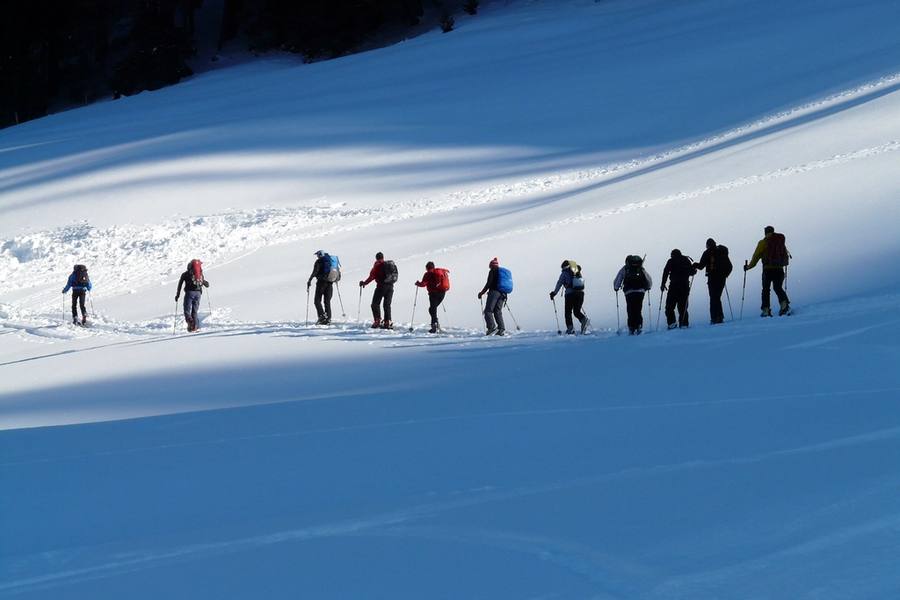
Temsili görsel (stok fotoğraf); ürünün kendisi değildir.
Debris Sets Like Concrete
Avalanche snow is pulverised and then compacted and refreezes within minutes, producing a material closer to concrete than to loose snow.
A plastic shovel flexes and breaks against it, which is why every avalanche-specific shovel has an aluminium blade.
Buying a plastic snow shovel for this purpose is a serious mistake, and the weight saving is trivial against the consequence.
The Probe Pinpoints And Confirms Depth
A transceiver narrows a location to within a metre or two, and probing in a spiral pattern from that point finds the exact position and the burial depth.
That depth information determines where to start digging, since digging directly downward onto a deeply buried person is slow and dangerous.
Probes are assembled by pulling a cable and locking, which must be practised with cold hands before it is needed.
Strategic Shovelling
Digging straight down at the probe is the instinctive approach and is considerably slower than the technique taught, which starts downhill of the probe and cuts inward.
That method moves snow away rather than lifting it vertically and gives access to the airway faster, which is what determines survival.
Shovelling is physically the hardest part of a rescue and is where a group tires, which is another reason technique and multiple diggers matter.
Length, Weight And What To Choose
Probes of two hundred and forty centimetres are a common minimum and three hundred is better in deeper snowpacks, since a probe shorter than the burial is useless.
Aluminium probes are cheaper and heavier, carbon is lighter and more expensive and can shatter in extreme cold.
Shovels with an extendable shaft give far more leverage than a short one, and a blade that is too large is heavy to load in dense debris.
Practice Matters More Than Product Choice
Assembling a probe, locking a shovel and beginning an organised dig are all skills that degrade without practice, and a rescue is not the time to learn.
Practising the full sequence, timed, with a buried pack is what avalanche courses cover and what most people never repeat afterwards.
A yearly practice session with the people you actually ski with is worth more than any equipment upgrade in this category.
Carrying position matters and is frequently wrong, since a probe and shovel strapped to the outside of a pack can be stripped off by the avalanche itself. Dedicated internal compartments keep them attached, and most touring packs have them for exactly that reason. A rescuer arriving at a burial with no shovel because it was torn away is a foreseeable and preventable failure.
Shovel blades double as snow anchors and emergency platforms, and a D-handle gives more control in dense debris than a T-handle while taking slightly more space in a pack.
Probe markings in centimetres let depth be read directly off the shaft, which tells a digging team how much snow they are moving before they start.
Deployment speed is what a probe is judged on, and a cable system that locks with one pull beats a threaded one every time under stress.
The Verdict
Equipment where material and practised technique matter and where the cheapest option is genuinely unacceptable.
Plastic shovels break in debris, short probes miss deep burials, and vertical digging wastes critical time.
Metal blade, always. Avalanche debris breaks plastic shovels and the snow sets within minutes.
Bir bakışta
Artılar
- Aluminium blades cut compacted debris
- Probes confirm exact position and depth
- Extendable shafts give real digging leverage
- Compact enough to carry always
Eksiler
- Plastic shovels are useless in debris
- Short probes miss deep burials
- Carbon probes can shatter in extreme cold
- Technique degrades without regular practice
Sıkça sorulan sorular
Can I use a plastic snow shovel?
No. Avalanche debris is pulverised then compacted and refreezes within minutes into something closer to concrete. Plastic flexes and breaks against it, which is why every avalanche shovel has an aluminium blade.
How long should the probe be?
At least 240 cm, and 300 cm in deeper snowpacks — a probe shorter than the burial depth is useless. Aluminium is cheaper and heavier; carbon is lighter and can shatter in extreme cold.
How should I dig?
Start downhill of the probe and cut inward rather than digging straight down. That moves snow away instead of lifting it vertically and reaches the airway faster, which is what determines survival.
Teknik Özellikler
| Type | Avalanche probe and metal shovel set |
| Blade material | Aluminium, never plastic |
| Debris | Sets like concrete within minutes |
| Probe minimum | Around 240 cm; 300 cm better |
| Probe use | Spiral pattern; confirms depth |
| Digging | Start downhill and cut inward |
| Shaft | Extendable for leverage |
| Requirement | Regular timed practice |
Özet
Metal blade, long probe, practised technique. Debris sets like concrete and plastic simply breaks.
Amazon'da Fiyatı Kontrol Et